Reconstruction and restoration companies are often called when conditions are at their worst. Whether responding to flood damage, fire loss, trauma scenes, hoarding situations, healthcare facility renovations, or homeless encampment cleanups, contractors frequently encounter materials that require more than ordinary disposal methods.
Among the most commonly misunderstood waste streams are biohazardous waste and regulated medical waste. Understanding the difference between these materials, how they should be handled, and when to call a qualified disposal provider can help protect employees, reduce liability, and keep projects moving forward.
What Is Biohazardous Waste?
Biohazardous waste is any material contaminated with biological substances that may pose a risk of infection. These materials can contain bacteria, viruses, or other pathogens capable of causing disease.
Examples include:
- Blood-soaked materials
- Human tissue
- Bodily fluids
- Contaminated personal protective equipment (PPE)
- Trauma scene cleanup debris
- Infectious disease remediation waste
Biohazardous waste requires special handling because of the potential for exposure to bloodborne pathogens and other infectious agents.
What Is Regulated Medical Waste?
Regulated medical waste (RMW) is a specific category of biohazardous waste that is subject to transportation, treatment, and disposal regulations.
Examples include:
- Needles and syringes
- Lancets
- Scalpels
- Blood and blood products
- Pathological waste
- Certain contaminated healthcare materials
For restoration companies, regulated medical waste is commonly encountered during:
- Hospital and medical office renovations
- Drug treatment center cleanouts
- Homeless encampment remediation
- Hoarding property restoration
- Trauma and unattended death cleanup
- Illegal dumping investigations
When these materials are discovered, they should never be disposed of with ordinary construction debris. Instead, they should be managed through a qualified medical waste provider such as Biosafe.
Biohazardous Waste vs. Hazardous Waste
One of the most common misconceptions is that biohazardous waste and hazardous waste are the same thing. While both require specialized handling, they present very different risks.
Biohazardous Waste
Biohazardous waste creates an infectious risk.
Examples include:
- Blood-contaminated absorbents
- Used sharps
- Human tissue
- Infectious waste
The primary concern is exposure to pathogens and disease transmission.
Hazardous Waste
Hazardous waste presents chemical, physical, or toxic hazards.
Examples include:
- Solvents
- Paint thinners
- Industrial cleaning chemicals
- Pesticides
- Mercury-containing devices
- Corrosive acids and bases
- Petroleum products
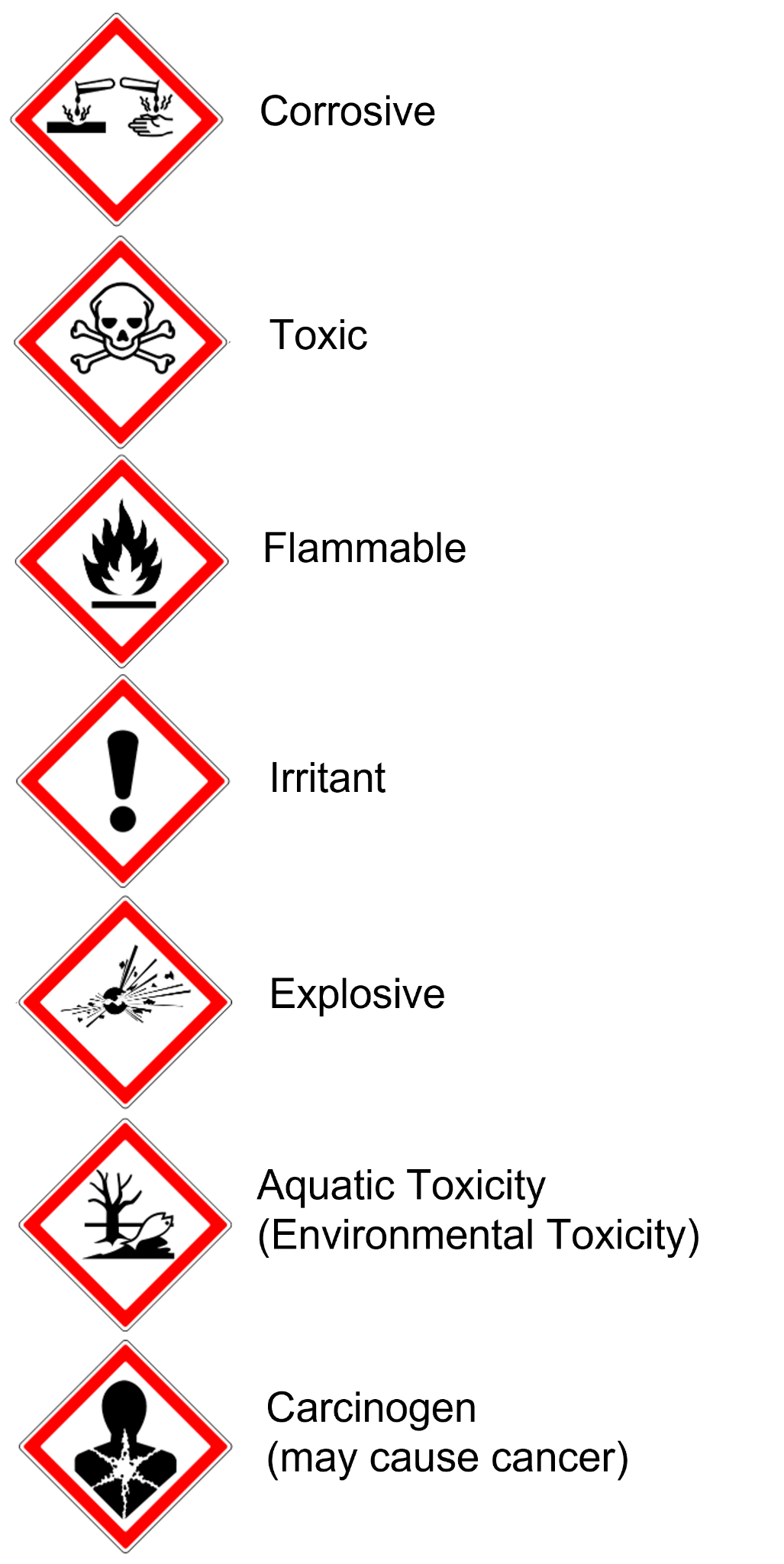
Figure 1: Common hazard pictograms used to identify chemical hazards including corrosive materials, toxic substances, flammable products, environmental hazards, and chronic health hazards.
A blood-soaked bandage may be regulated medical waste. A container of paint thinner may be hazardous waste. Both require proper disposal, but they are managed through different regulatory systems.
Some restoration projects, particularly healthcare renovations and laboratory cleanouts, may contain both waste streams simultaneously.
To learn more about hazardous waste management for NC businesses, check out the NC DEQ website on hazardous waste.
The Hidden Danger of Sharps
Among all forms of regulated medical waste, sharps present one of the greatest risks to restoration workers.
Needles and syringes are often discovered in:
- Vacant properties
- Homeless encampments
- Wall cavities
- Ceiling spaces
- Healthcare facilities
- Hoarding environments
A single needlestick injury can expose workers to bloodborne pathogens and trigger medical evaluations, documentation requirements, and project delays.
Workers should never place loose sharps into trash containers, dumpsters, or medical waste boxes.
Instead, sharps should be placed immediately into approved puncture-resistant sharps containers.
Before handling discovered sharps, restoration companies should review Biosafe’s Sharps Disposal Instructions and ensure field personnel understand proper handling procedures.
Additional information on compliant sharps management can also be found through Biosafe’s sharps disposal resources.
Packaging Medical Waste Correctly Matters
Improper packaging is one of the most common mistakes made when restoration companies encounter medical waste unexpectedly.
Medical waste should generally be:
- Placed into approved red biohazard bags when required.
- Packaged inside approved shipping containers.
- Properly sealed and labeled.
- Stored securely until pickup.
Improper packaging can create safety hazards for employees, transport personnel, and disposal facilities.
Before preparing a shipment, contractors should review Biosafe’s How to Pack a Medical Waste Box guide available through our Resources Center.
This resource provides step-by-step instructions and can help prevent common packaging errors that delay pickups or create compliance concerns.
For additional educational materials, visit the Biosafe Resources Center, where businesses can access disposal instructions, compliance information, and downloadable guides.
Create a Medical Waste Response Plan Before an Emergency
Many reconstruction companies do not think about medical waste until they find it on a project.
Unfortunately, by that point, timelines are often compressed and disposal decisions need to be made quickly.
Biosafe recommends that restoration companies:
- Establish a relationship with a medical waste provider before an emergency occurs.
- Train employees on sharps recognition and safe handling.
- Maintain access to approved sharps containers.
- Review medical waste packaging procedures.
- Download and retain Biosafe’s educational guides for future reference.
Having a response plan in place can improve worker safety, reduce project delays, and simplify compliance when regulated medical waste is discovered unexpectedly.
Partner With Biosafe
Biosafe works with reconstruction companies, restoration contractors, remediation specialists, healthcare facilities, and property managers throughout North Carolina.
Our team understands that emergency response projects rarely follow a predictable schedule. That’s why we provide responsive service and flexible solutions for businesses that may encounter biohazardous waste, sharps, or regulated medical waste during the course of their work.
If your team discovers sharps, blood-contaminated materials, or other regulated medical waste during a project, contact Biosafe for guidance on safe packaging, transportation, and disposal.
Our team understands the challenges that restoration companies face when it comes to timelines and urgency. Our service agreement is tailored to meet the needs of reconstruction companies in need of biohazardous waste removal. We highly recommend having a provider, like Biosafe, under contract and in place to ensure preparation when the time comes.
Visit our Resources Center for additional information, download our educational materials, or contact Biosafe to discuss a service plan tailored to your business.