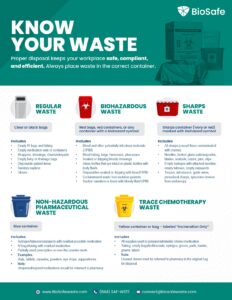
Correctly sorting regulated medical waste is essential for maintaining a safe, compliant, and cost-efficient clinical environment. Each waste stream—regular, biohazardous, sharps, pharmaceutical, and trace chemotherapy—carries different risks and therefore requires distinct handling, packaging, and disposal methods. Misclassification can lead to cross-contamination, exposure to infectious materials, safety incidents, and regulatory penalties. As emphasized in the guide’s “Waste Compatibility Guidelines”, mixing incompatible waste types can create serious compliance issues and prevent items from being destroyed through approved medical-waste processes.
Proper segregation also protects staff from injuries, particularly needlestick risks associated with sharps. When sharps are isolated in rigid, puncture-proof containers, the likelihood of accidental contact during handling, transport, or disposal is significantly reduced. For red-bag (biohazardous) materials, correct sorting ensures that items saturated with blood or other potentially infectious materials are treated using appropriate sterilization or destruction methods, protecting healthcare workers as well as the environment.
Segregating pharmaceutical and chemotherapy waste as outlined in the guide prevents hazardous chemicals or drug residues from entering general medical waste streams, where they could pose environmental hazards or violate disposal regulations. Ultimately, correct waste sorting ensures that each waste category is routed to the proper disposal technology—whether incineration, autoclaving, or chemical treatment—helping facilities remain compliant with federal and state medical-waste standards while optimizing safety and efficiency.
For more information on the regulations regarding regulated medical waste, check out our free blog on medical waste compliance.
What This Guide Includes
Page 1 — Waste Categories & Correct Containers
- Regular Waste (clear/black bags): empty IV bags, wrappers, gloves, underpads, sanitary items
- Biohazardous Waste (red bags/containers): blood/OPIM waste, soaked dressings, suction canisters, isolation waste
- Sharps Waste (ivory/red sharps container): needles, blades, broken glass, syringes with attached needles, procedural sharps
- Non-Hazardous Pharmaceutical Waste (blue container): partially used medications, vials, tablets, capsules, IV bags with residual meds
- Trace Chemotherapy Waste (yellow “Incineration Only” container): tubing, empty drug containers, PPE used during chemo preparation or delivery
Page 2 — Waste Compatibility Rules
- Allowed combination: sealed sharps containers may go in the same medical-waste box as red-bag waste if properly secured and not overfilled
- Never combine: pharmaceutical + sharps; pharmaceutical + red-bag waste; chemo waste + any other waste type
- Unique boxes required: each incompatible waste type must have its own clearly labeled container
- Key reminder: proper segregation protects staff, ensures compliance, and reduces disposal costs
If you have more questions regarding medical waste, check out our FAQ page, our free blog covering various topics regarding medical waste or contact us using the form below.